What New Members Should Know Before Their First Club Range Day
- Wallace Gilbert
- 0
- on Aug 12, 2026
A first visit to a club range is not a test of confidence or marksmanship. New members do not need to arrive knowing every command, procedure or piece of equipment. A safe visit depends on preparation, attention and a willingness to pause. Learn the local routine before handling equipment, confirm what the club expects, and treat unusual noise, damage or confusion as reasons to stop and ask. This makes the day more useful for you and easier for the members helping you settle in.
Start with the club's actual routine
A membership card rarely tells the whole story. Clubs may differ in sign-in procedures, access hours, target standards, firing-line commands, ceasefire practice, guest rules and the areas where equipment may be handled. Read the current member information, then contact the club or range officer if anything is unclear. Do not rely on an old message, a friend's memory or a general rule from another facility.
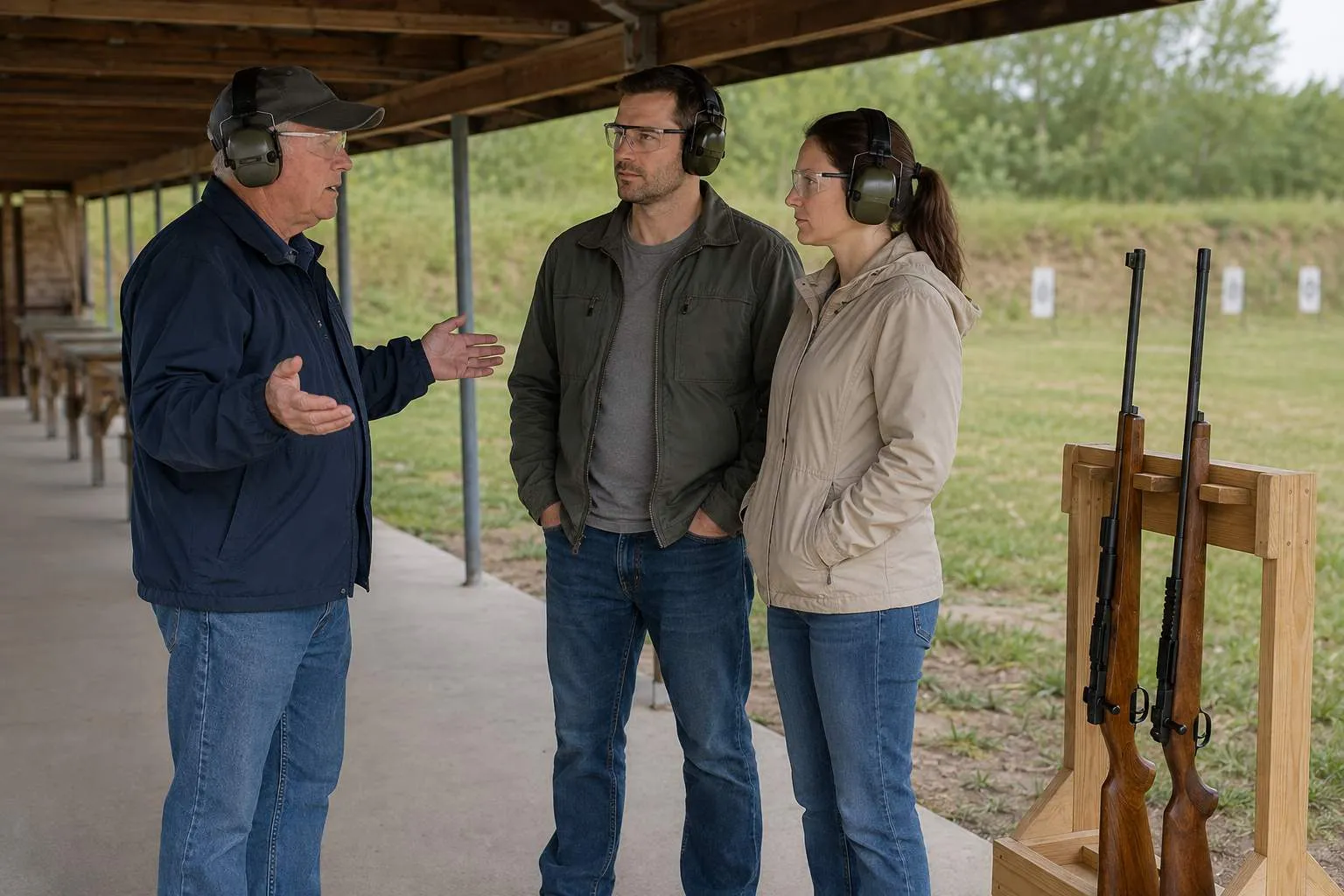
Arrive early enough to check in without rushing. Find out who is responsible for the range and introduce yourself. Ask where you should stand, where equipment may be stored, how targets are placed and what signal means the line is safe. If an answer conflicts with a posted sign or written rule, stop and request clarification. The range officer's instruction for that session takes priority over guesswork.
Treat safety commands as a shared language
Range safety depends on everyone responding to the same signals. A command to stop means stop immediately, keep the equipment pointed in a safe direction and wait for the next instruction. During a declared ceasefire, do not handle a firearm, ammunition or bag on the bench unless the club's procedure clearly permits it. Step behind the designated line only when directed.
Have eye and hearing protection ready before entering the active area, rather than searching for it after firing begins. Keep muzzles pointed in the direction required by the facility, keep your finger outside the trigger guard until you have deliberately decided to fire, and never handle an unfamiliar firearm without instruction from a qualified person or range officer.
If you lose track of whether the line is safe, do not infer the answer from what someone else is doing. Ask. A pause is minor; an assumption can create a serious problem.
Know when equipment needs a pause
Maintenance is part of prevention, not a chore reserved for advanced shooters. Before use, check for obvious damage, loose parts, unusual obstruction, corrosion, cracked stocks or grips, and anything that does not look or feel normal. Inspect your eye and hearing protection as well. Replace or correct damaged or poorly fitting protective equipment before the session.
During use, watch for an unfamiliar sound, unexpected recoil, a failure to operate normally, smoke in an unusual place, a loose sight or a round that does not appear to have discharged as expected. Keep the firearm pointed safely, stop handling it unnecessarily and tell the range officer. Do not fire another round to diagnose the problem or attempt an improvised repair on the firing line.
The same caution applies to the facility. Report a damaged bench, unstable target frame, exposed sharp edge, poor backstop condition or unclear firing-line boundary rather than working around it. You do not need to diagnose the cause; describe what you saw, where it was and whether anyone is currently exposed.
Choose training before confidence
Informal advice from a helpful member can be valuable, but it is not a substitute for structured firearms training. If you are unfamiliar with the firearm, the club's commands or basic loading and unloading, arrange instruction before your first independent session. Ask about the instructor's qualifications or experience, required equipment and whether the lesson suits your level.
A sound training environment welcomes questions and allows practice to stop when something is unclear. Be cautious of anyone who treats safety concerns as weakness, rushes through handling steps or discourages you from checking a rule. Confidence should follow repeatable, supervised habits, not replace them.
Use the first visit to identify the kind of participation that suits you. Some members prefer organized practice, others attend social work parties, and some focus on competition or skills development. You do not need to adopt every part of club life at once. Start with activities whose rules you understand and for which you have suitable training.
Use this checklist before leaving home
Keep the list short enough to use:
– Confirm the club's current access, sign-in and range rules.
– Pack required eye and hearing protection, suitable clothing, water and any permitted targets or supplies.
– Check equipment for visible damage, obstruction, loose parts or other unusual symptoms.
– Bring only the equipment and ammunition permitted by the facility; verify uncertain items first.
– Know whom to report to when you arrive and where the safety briefing takes place.
– Have a plan to stop if you are tired, confused, rushed or uncomfortable.
Rules about firearms, transport, storage, ammunition, licensing and club operation vary by jurisdiction and can change. Verify current requirements through the relevant official government or regulatory source, as well as the club's written rules. Membership does not automatically answer legal questions, and a rule at one range may not apply at another.
The most useful habit on a first club range day is simple: notice, ask and pause. Members who follow local procedure, report maintenance concerns and accept instruction help protect the range's shared rhythm. That is how participation becomes comfortable without treating safety as background noise.